Description
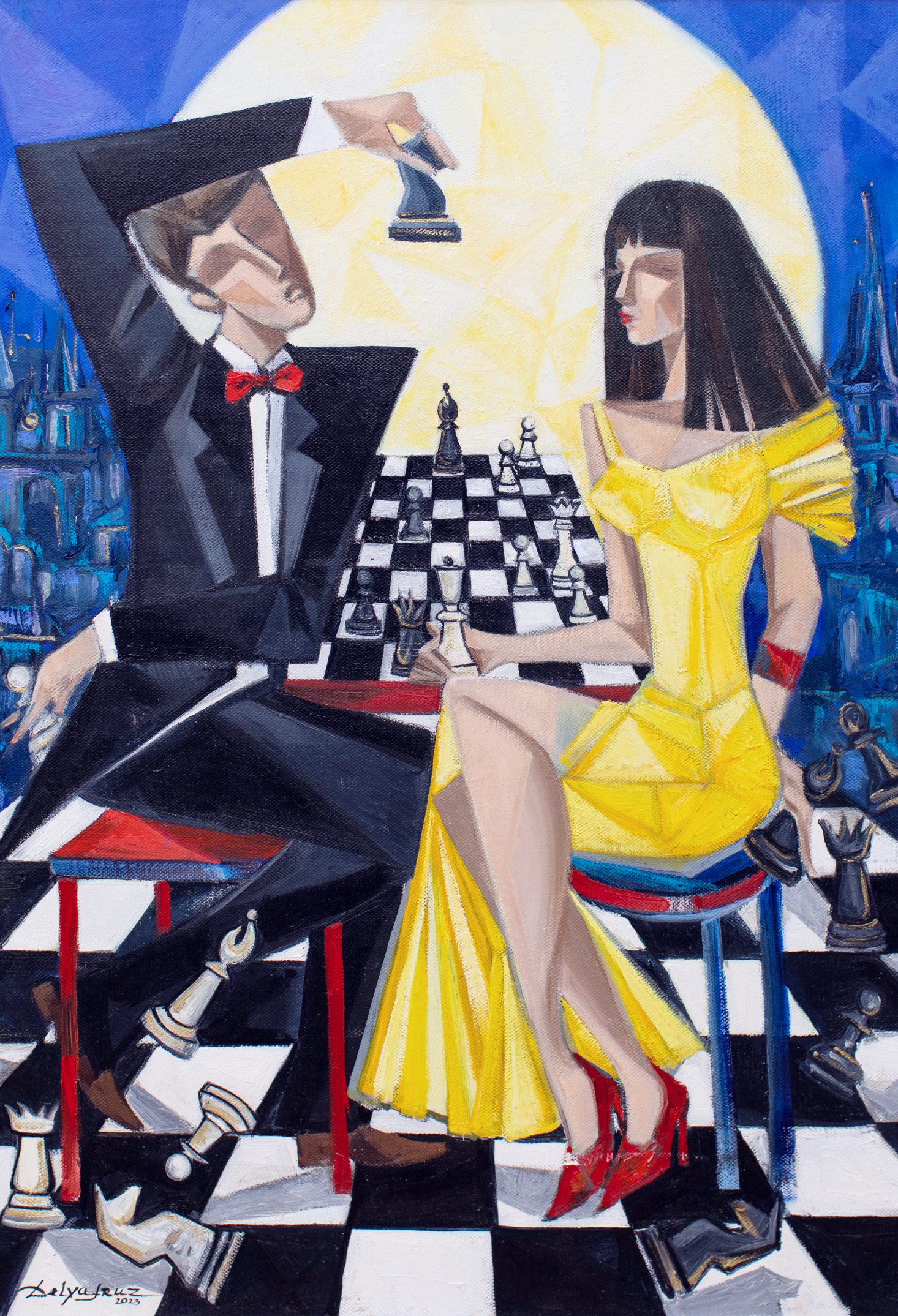
In this work, I wanted to convey the fine line between game and reality,
between strategy and emotions, between control and inevitability. Two characters sit
across from each other at a chessboard, but this is not just a match—it is a clash of
worldviews, personalities, and destinies.
The Man – Player or Victim?
His posture is confident, yet tense. He lifts the knight, as if contemplating a
decisive move, but does he really control the situation? Or has his hand hesitated in
the air because he already knows the game is lost? His formal black suit and bow tie
suggest a desire to be in charge, but the fallen chess pieces beneath his feet symbolize
past mistakes, lost battles, and pride shattered into dust.
The Woman – Queen or Fatal Mystery?
She sits gracefully in a bright yellow dress—a symbol of light, energy, and
intelligence. Her posture is relaxed, her gaze expectant yet certain. She holds the
queen—the most powerful piece on the board. She already knows what the next move
will be, and that move will change everything. Her red heels symbolize passion and
inner strength, while the red bracelet on her wrist signifies fate, perhaps one already
sealed.
The Moon – Witness to the Game
Behind them looms a giant full moon. It represents cycles, the eternal
repetition of scenarios, hidden truths. The moon illuminates the chessboard of life,
but its light is cold and impartial—it takes no sides.
The Background – City or Illusion?
In the distance, abstract outlines of a gothic city emerge, representing old
beliefs, traditions, and laws that the players follow. This city seems to blur, losing its
clarity, as if it is merely a backdrop in the great chess match of life.
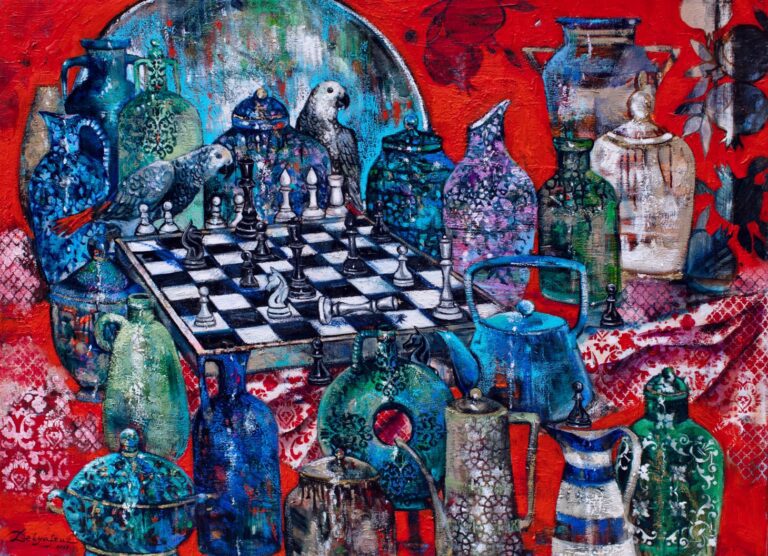
The Chessboard – Stage of Fate
The black and white squares are not just a playing field—they are life itself.
They embody the duality of existence: good and evil, light and shadow, reason and
emotion. Some pieces still stand, while others have already fallen. Every move made
leaves a mark in this eternal game.
The Deeper Meaning
“The Game of Fate” is more than just a chess match. It is a metaphor for
relationships, power, and choice. Who is the true strategist in this game, and who is
merely following a pre-planned scenario? We often believe we are in control, yet fail
to see that we are part of someone else’s plan. Who is the real winner here? The one
who makes the move, or the one who has already foreseen it?